
Young and Christian in Benin: between a Vodun heritage and revival churches
A country with a median age of around 18, three major religious families living side by side, and 402 denominations founded in under twenty years. Portrait of a unique landscape.
 By Rédaction MAV
August 20, 2026
4 min read

Benin is one of the few countries in the world where Christianity, Islam and the traditional Vodun religion coexist in comparable proportions. It is also one of the youngest countries on the planet. Growing up Christian here is like nothing else.
A very young country, a mixed religious landscape
Around 14 million inhabitants and a median age of about 18: Benin is among the youngest countries in the world.
On the religious front, estimates vary depending on sources and methods. The most recent national census (RGPH-4) puts Christianity at around 43% of the population and Islam at around 27%, while other international estimates put the Christian share between 48 and 52%.
Vodun, long the country’s most widely declared religion, is now thought to stand between 11 and 18% depending on the source, in third place. Geographically, the North remains mostly Muslim; the South, where Cotonou lies, leans more towards Christianity.
Christianity in Benin is not a single bloc
The Catholic Church, established during the colonial period, remains the largest historic component, organised into two archdioceses and eight dioceses.
The Celestial Church of Christ, an African-founded church started in Porto-Novo in 1947 by the prophet Samuel Oshoffa — recognisable by its members dressed in white — is the country’s largest non-Catholic Christian denomination, with an estimated 5 to 7% of the population.
On top of this comes evangelical and Pentecostal Protestantism, which has been expanding rapidly for several decades.
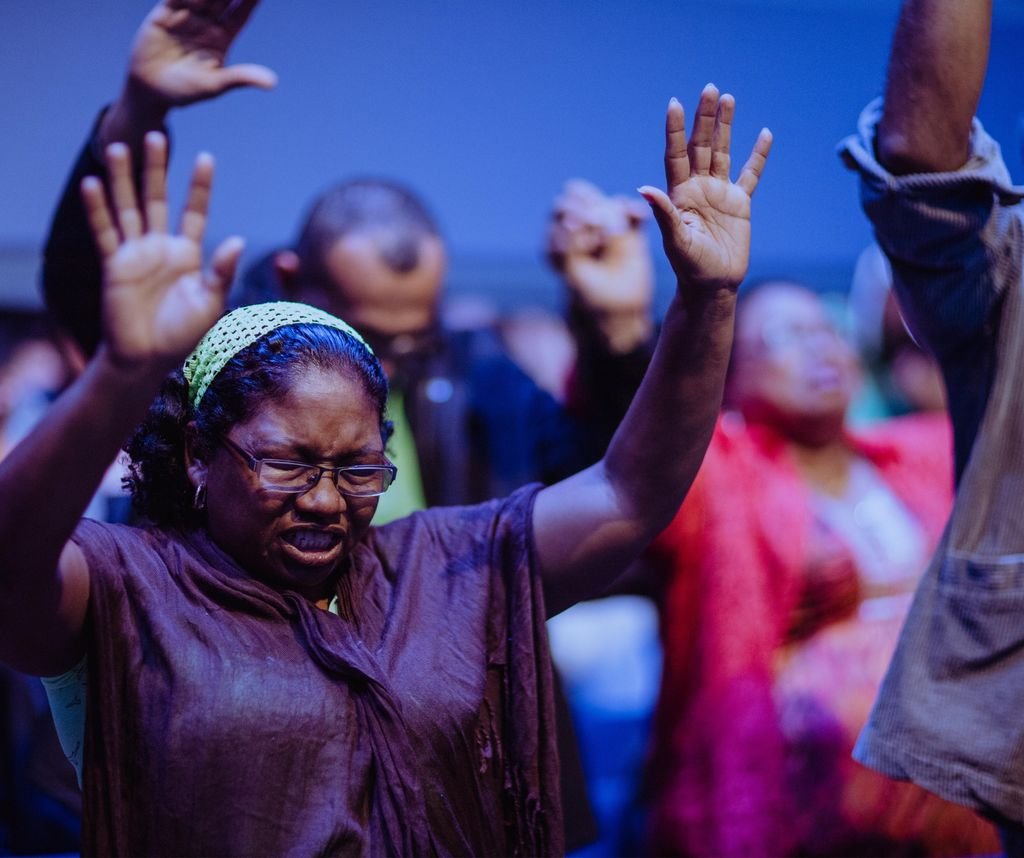
1990: the turning point
The political shift of 1990, which took Benin from a Marxist-Leninist regime hostile to religion to a democracy guaranteeing freedom of worship, opened the way for a huge expansion of revival churches.
The figures are striking. According to academic research on the period, 402 new religious denominations were founded between 1990 and 2008, compared with only 36 between 1944 and 1989. By 2002 there were more than 3,000 places of worship, and a 2001 survey by the mission agency ARCEB estimated the evangelical and Pentecostal population at around 35% of the country.
It is within this ecosystem that organisations such as Impact Centre Chrétien, which founded the Effuzion festival, have grown.
402 denominations founded between 1990 and 2008, compared with 36 between 1944 and 1989.
What it means to be twenty here
For many young Beninese, faith is lived at the crossroads of three influences at once.
A family heritage sometimes rooted in Vodun practices. Growing exposure to a globalised evangelical culture, spread by the media and social networks. And faith choices that are increasingly personal, sometimes different from their parents’ religious affiliation.
Syncretism remains common: someone who calls themselves Christian or Muslim may still take part in family Vodun rites, without experiencing it as a contradiction.
In this context, large youth gatherings such as Effuzion reflect a search for community, identity and meaning — carried by an expression of faith that is more musical and participatory than in the historic churches.
The flip side: a religious offer that calls for discernment
The rapid growth of revival churches and so-called “prophetic” movements has also, in recent years, brought controversial figures and groups to the fore, reported by the Beninese and regional press for practices far removed from classic biblical teaching.
This reality, documented by several media outlets, is a reminder of something simple: in such an abundant offer, not every initiative is of equal value. Discernment is not suspicion; it is a skill.
Key takeaways
- Benin combines a very young population with three major religious families in comparable proportions.
- Christianity in Benin is made up of historic Catholicism, the Celestial Church of Christ and fast-growing Pentecostalism.
- 1990 triggered a massive expansion of revival churches.
- Syncretism remains common, and the diversity of the religious offer calls for real discernment.
Sources consulted: RGPH-4 census / INStaD, thesis on evangelical and Pentecostal Protestantism in Benin (Theses.fr), Wikipedia (Religion in Benin), effuzion.org, impactcentrechretien.bj, Beninese press (Le Potentiel, Banouto, Critikmag), Jeune Afrique. Religious statistics vary by source and methodology; ranges are given where they exist.



Leave a Reply